Polymer Science A to Z: Getting Answers from FTIR and Raman Analyses
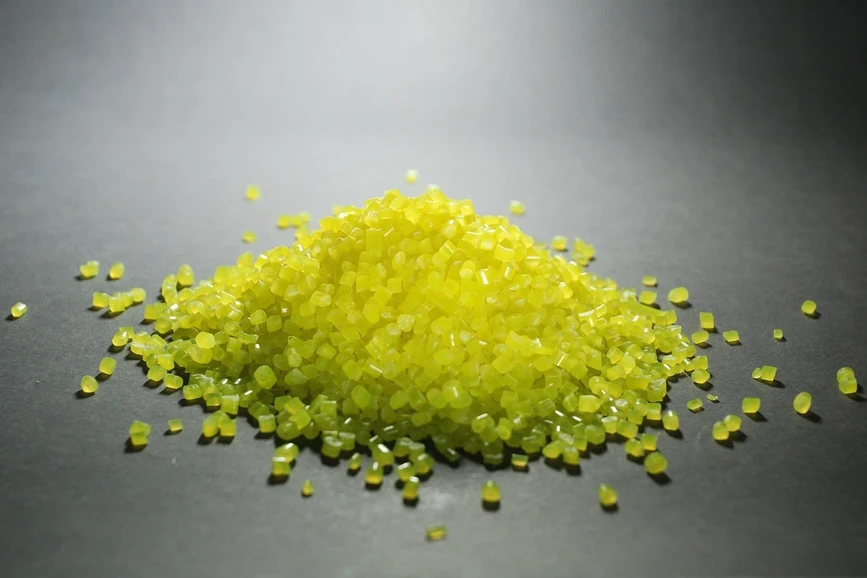
We’ll explore polymer characterization, including quick polymer identification for recycling purposes, identifying product defects or failures for quality control, reverse engineering to facilitate product development. We’ll dive into polymer research – an active area of scientific endeavor where performance and a reduced environmental impact are key elements of interest. Learn why vibrational spectroscopy (infrared (IR) and Raman) instruments are useful for the analysis of polymers in an industrial setting, as IR and Raman are highly specific and sensitive tools that are non-destructive and easy to use.
During the session, we’ll offer clear examples that demonstrate the effectiveness of IR and Raman analysis in each of these categories.
Key webinar take-aways:
- The importance of polymer research where performance and a reduced environmental impact are key elements of interest.
- Utilizing vibrational spectroscopy (infrared (IR) and Raman) as a useful tool for the analysis of polymers in an industrial setting.
- IR and Raman are highly specific and sensitive tools that are non-destructive and easy to use.
- Examples will be presented demonstrating the effectiveness of IR and Raman analysis in each of these categories.
Presenter: Dr. Tom Tague (Applications Manager, Bruker Corporation)
Dr. Tom Tague is the Applications Manager for Bruker Optics. He is also a member of the Visiting Advisory Committee of the Metropolitan Museum of Art in New York and the Strategic Advisory Board of Amplified Sciences. Dr. Tague received his Ph.D. from the University of Utah in Physical Chemistry and his B.S. also in Chemistry from the University of Texas at San Antonio. He also conducted his postdoctoral research at the University of Virginia working with Professor Lester Andrews. He is a member of the American Chemical Society, Society for Applied Spectroscopy, American Physical Society, and the Optical Society of America. Dr. Tague is active in developing new methods and instrumentation with the goal of improving the sensitivity and detection limits of spectroscopy related applications. Tom has more than 90 publications and 5 Patents.