

Diffraction in micro-XRF – A tool, rather than a complication?
Micro-XRF is often understood as a tool for spatially resolved chemical analysis, both qualitative and quantitative. When X-rays are directed at a sample, they induce inner electron shell transitions, and the subsequently emitted radiation is analyzed in terms of intensity and energy to determine the sample's atomic composition.
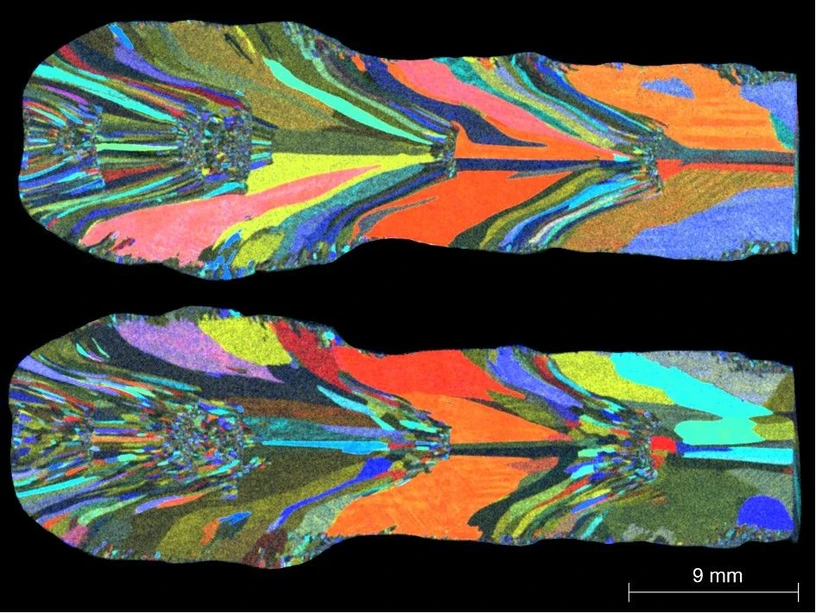
However, for most metals, ceramics, minerals and other samples with crystalline structure, the X-rays are also diffracted by the samples, resulting in new peaks in the intensity spectrum with only distant relations to fluorescence. These diffraction peaks are often regarded as a nuisance – an undesirable effect that complicates the analysis of fluorescence, experimental setup, or both.
In this webinar, we will explore how diffraction signals in micro-XRF can be leveraged to gain additional insights beyond chemical composition. We will showcase applications in metallurgy, crystal growth, earth sciences, and more, discussing the impact of factors such as structural quality and crystal orientation.
 Bruker: Diffraction in micro-XRF
Who should attend?
- Micro-XRF users in industry, science and R&D
- People working in metallurgy, the earth sciences, physics and crystallography
Presenter: Dr. Christian Hirschle (Application Scientist micro-XRF)
Presenter: Falk Reinhardt (Application Scientist micro-XRF)


