

Advancing Coordination Chemistry with Single Crystal X-ray Diffraction
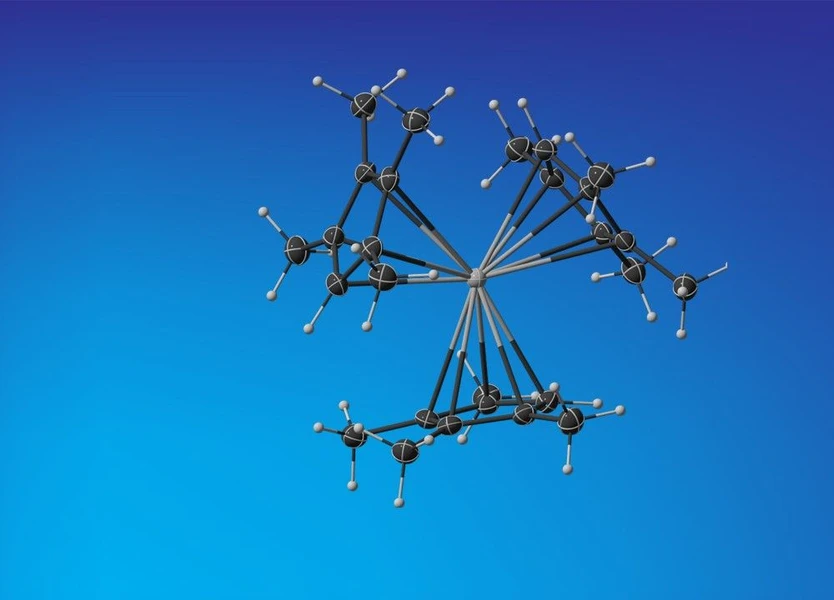
Modern coordination chemistry can control various material properties—such as structure, reactivity, color, magnetism, catalytic function and many more—through metal complexes. The understanding of how the metals interact with surrounding molecules or ions often is in the focus of the research. To analyze aspects like the metal coordination number, geometry, ligand binding modes, and metal–ligand bond lengths and angles Single Crystal X-ray Diffraction (SC-XRD) is invaluable, as it provides a clear three-dimensional model of the complex, unlike many other techniques.
Join our webinar to learn how your research can benefit from Bruker’s latest innovations in SC-XRD. Along a number of examples, we will demonstrate the benefits of advanced X-ray diffraction technology. We will show how modern instrumentation helps to address challenges typical in coordination chemistry and to deliver the precision needed for accurate 3D structure determination in modern crystallography.
Who should attend?
- Coordination chemists interested in unambiguous 3-D structure determination
- Crystallographers looking to implement the latest state-of -the-art technology into their X-ray facility
- Anyone interested in the advanced X-ray technology for structure determination
Which topics will be covered?
- Coordination Chemistry and Metal-Organic Frameworks – Challenges in structure determination
- How Coordination Chemistry Benefits from single crystal structure determination
- Technical Advances on SC-XRD hardware and software
- The right wavelength for the right crystal
- Better data - faster
Speaker: Dr. Martin Adam (SC-XRD Product Manager, Bruker AXS)


