

ICP-MS for Hybrid Photoelectrode Characterization
Renewable energy resources such as solar are promising complements to the combustion of fossil fuels. However, the intermittent and diurnal nature of sunlight necessitates economical and efficient energy storage technologies. A promising approach to both storing solar energy and generating combustible liquid fuels is driving the transformation of abundant energy-poor feedstocks (CO2, H2O) into energy-dense liquid fuels using energy from solar photons, known as “artificial photosynthesis.”
One approach for artificial photosynthesis is to immobilize fuel-producing molecular catalysts onto light-absorbing semiconductor materials to create “hybrid photoelectrodes,” allowing for both the stability of heterogenous surfaces and the tunability of molecular catalysts. The Center for Hybrid Approaches in Solar Energy to Liquid Fuels (CHASE) is a multi-institutional energy innovation hub which aims to advance hybrid photoelectrodes for the light-driven generation of liquid fuels from CO2 and H2O. A variety of chemical techniques, including sonochemical hydrosilylation, π-π stacking, and electrochemical grafting, are utilized to anchor ruthenium and rhenium molecular CO2-reduction catalysts to a silicon surface.
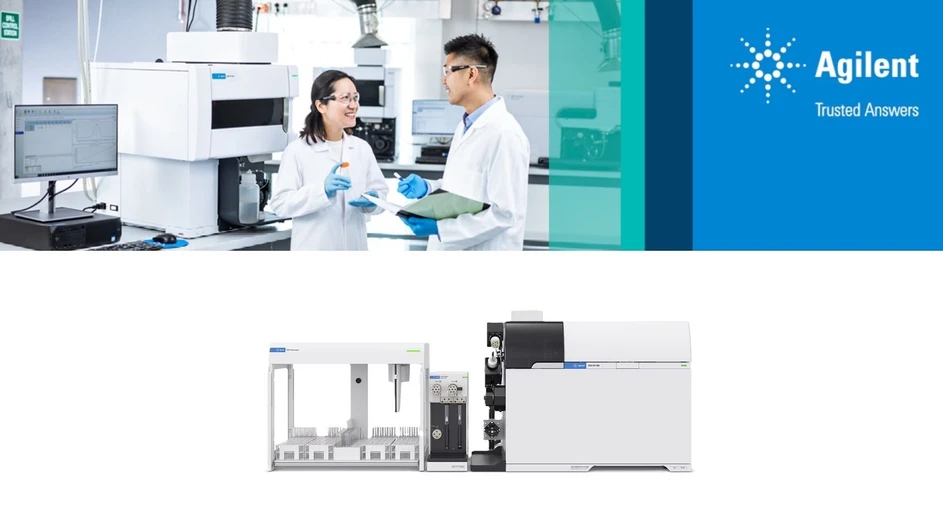
To study the efficacy of these catalyst loading techniques, Inductively Coupled Plasma Mass Spectrometry (employing an Agilent 7850 ICP-MS) is leveraged to quantify catalyst surface coverage. Silicon samples are digested in an HNO3/HCl matrix to solubilize ruthenium and rhenium metal centers. As each anchored molecular catalyst contains one metal center, surface coverage estimates can be drawn by pairing ICP-MS data with the dimensions of the catalyst and the size of the silicon photoelectrode. From these data, key conclusions are drawn which correlate anchoring technique, reaction time, and silicon morphology to the loadings of these molecular catalysts. This information provides a guiding framework for next-generation designs of hybrid photoelectrodes.
Presenter: Jillian L. Dempsey (Director, Center for Hybrid Approaches in Solar Energy to Liquid Fuels (CHASE) and an Associate Editor for ACS Electrochemistry)
Jillian L. Dempsey is a professor at the University of North Carolina at Chapel Hill. She is currently the Director of the Center for Hybrid Approaches in Solar Energy to Liquid Fuels (CHASE) and an Associate Editor for ACS Electrochemistry.
Jillian received her S.B. from the Massachusetts Institute of Technology in 2005 where she worked in the laboratory of Prof. Daniel G. Nocera. As an NSF Graduate Research Fellow, she carried out research with Prof. Harry B. Gray and Dr. Jay R. Winkler at the California Institute of Technology, receiving her PhD in 2011. From 2011–2012 she was an NSF ACC Postdoctoral Fellow with Daniel R. Gamelin at the University of Washington.
In 2012, Jillian joined the faculty at the University of North Carolina at Chapel Hill. Her research group explores charge transfer processes associated with energy capture and conversion, including proton-coupled electron transfer reactions and electron transfer across interfaces. Her research bridges molecular and materials chemistry and relies heavily on methods of physical inorganic chemistry, including transient absorption spectroscopy and electrochemistry.
She has received numerous awards including the Harry B. Gray Award for Creative Work in Inorganic Chemistry by a Young Investigator (2019), the J. Carlyle Sitterson Award for Teaching First-Year Students (2017), a Sloan Research Fellowship (2016), a Packard Fellowship for Science and Engineering (2015), the Agnes Fay Morgan Research Award (2020), the University Award for Advancement of Women (2021), and the Brown Investigator Award (2026).
Presenter: Rebecca E. Powers (Graduate Student, University of North Carolina at Chapel Hill)
Rebecca (Becca) E. Powers is a fourth-year graduate student at the University of North Carolina at Chapel Hill in Prof. Jillian L. Dempsey’s research group.
Becca graduated summa cum laude with a B.S. in Chemistry and B.S. in Physics from Creighton University in 2022. At Creighton University, she researched in the laboratories of Dr. Kayode Oshin and Dr. Janet Seger. While pursuing degrees in both chemistry and physics, Becca conducted research across both fields, including work on the Relativistic Heavy Ion Collider (RHIC) at Brookhaven National Laboratory. Becca was selected as both a Clare Boothe Luce fellow and a Goldwater Scholar during her undergraduate studies.
Becca joined Prof. Jillian Dempsey’s lab in 2022 and began researching as a part of the Center for Hybrid Approaches in Solar Energy to Liquid Fuels (CHASE). Her research explores the chemical and physical properties of semiconducting photoelectrodes for photon capture and solar fuel generation. Becca’s research utilizes a large range of techniques, including electrochemistry, inductively coupled plasma-mass spectroscopy (ICP-MS), X-ray photoelectron spectroscopy (XPS), and time-resolved infrared spectroscopy (TRIR). Becca’s outreach and research efforts have been recognized with a Prof. James Tamage Dobbins Award and UNC Chemistry Graduate Student Award for Research Excellence.


