

Managing 4D-STEM data with smarter acquisition
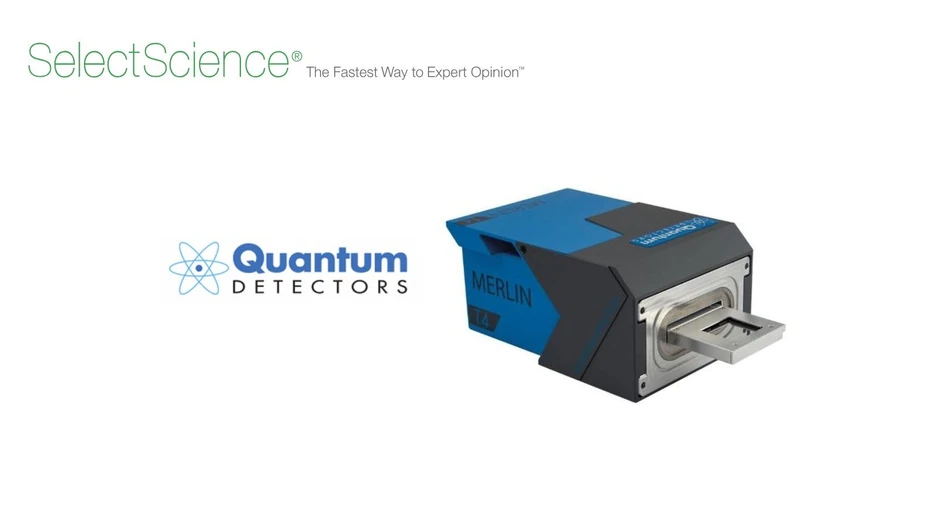
Modern pixelated detectors can generate tens to hundreds of gigabytes of data during a single 4D-STEM scan, creating practical challenges for acquisition, processing, and interpretation.
In this SelectScience® webinar, Arno Annys will demonstrate how event-driven electron detection can provide a more efficient representation of electron signals and help streamline the workflow from experiment to scientific insight.
Using application-based examples, the session will explore how event-driven acquisition, adaptive scanning strategies, and real-time ptychographic reconstruction can reduce the 4D-STEM data burden, support low-dose experiments, and provide immediate feedback during acquisition.
Attendees will learn how these approaches can make advanced 4D-STEM experiments more scalable, responsive, and accessible for routine use.
Certificate of attendance
- If you attend the live webinar, you will automatically receive a certificate of attendance, including a learning outcomes summary, for continuing education purposes.
- If you view the on-demand webinar, you can request a certificate of attendance by emailing [email protected].
Webinar details
- Cost: Free to attend
- Location: Online
- Duration: 60 minutes
Registration is required to secure your place. If you register but can’t attend live, you will receive a link to the on‑demand recording once it becomes available
Who should attend?
This event is perfect for individuals working in:
- Electron microscopists, materials scientists, physicists and instrument scientists working with STEM, 4D-STEM, ptychography, diffraction imaging or electron energy-loss spectroscopy
- Researchers investigating beam-sensitive materials, developers of microscopy acquisition and processing workflows, facility managers, and scientists considering the adoption of event-driven direct electron detection
What will this webinar cover?
Key learning objectives:
- Understand how event-driven detection changes the way 4D-STEM data are acquired, represented and processed.
- Discover how adaptive scanning strategies can improve experimental flexibility and focus acquisition on the most scientifically valuable regions.
- Learn how event-by-event ptychographic reconstruction can provide rapid feedback during an experiment.
- See practical examples of how event-driven workflows can reduce data volumes and support low-dose and beam-sensitive applications.
Speaker: Arno Annys (PhD Researcher, Electron Microscopy for Materials Science, University of Antwerp)
Arno Annys is a PhD researcher in the group of Professor Jo Verbeeck within the Electron Microscopy for Materials Science department at the University of Antwerp. His research focuses on the development of advanced 4D-STEM and electron energy-loss spectroscopy techniques. He is particularly interested in how event-driven direct electron detectors can enable new acquisition strategies, including adaptive scanning, efficient event-based data processing and real-time electron ptychography.
Moderator: Todd Beanlands (Science Editor, SelectScience)


