Výsledky soutěže o nejlepší práci mladých autorů v oboru spektroskopie 2025 - 1. místo v Kategorii B
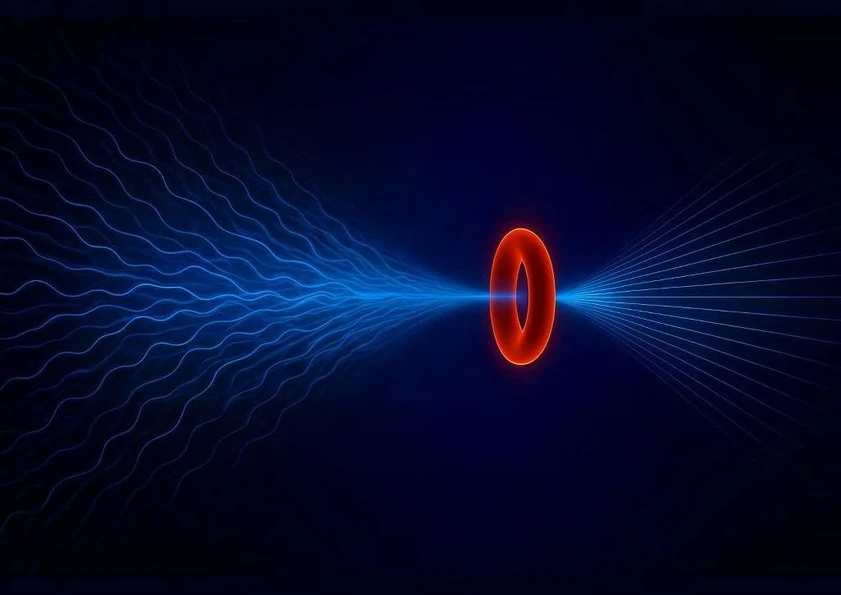
Marius Constantin Chirita Mihaila: Figure1: Graphical visualization of light-based (red) aberration correction of electrons (blue).
Soutěž o nejlepší práci mladých autorů v oboru spektroskopie byla i letos nedílnou součástí lednového zasedání Hlavního výboru Spektroskopické společnosti. Letošní ročník hostila tradičně Univerzita Pardubice a do soutěže bylo přihlášeno dvacet soutěžících, z toho sedm v kategorii A a třináct v kategorii B. Počet přihlášených prací tak znovu potvrdil, že tato soutěž zůstává pro mladé autory atraktivní a stabilně vyhledávanou příležitostí k odborné prezentaci.
Nad průběhem soutěže dohlížela čestná předsedkyně doc. Ing. Anna Krejčová, Ph.D. Samotný program pak dobře ukázal šíři současného spektroskopického výzkumu, přičemž jednotlivé směry a metody byly zastoupeny poměrně vyrovnaně. Soutěžní blok navíc nepředstavoval pouze přehled jednotlivých výsledků, ale poskytl i přehled o rozmanitosti metodických přístupů a aplikací současné spektroskopie.
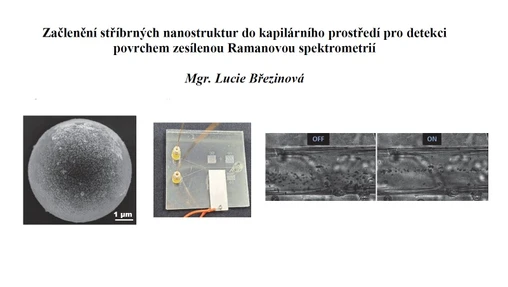
V kategorii A, zaměřené na diplomové práce, porota udělila první místo Ing. Janě Knytlové z Vysoké školy chemicko-technologické v Praze za práci na téma „Ambientní hmotnostní spektrometrie pro analýzu selektivních modulátorů androgenního receptoru“. Druhé místo získal Filip Jozefov z Ústavu organické chemie a biochemie AV ČR za práci „Predikce molekul z vícestupňové hmotnostní spektrometrie pomocí grafových neuronových sítí a AI modelu DreaMS“ a třetí místo pak Mgr. Lucie Březinová z Ústavu analytické chemie AV ČR za práci „Začlenění stříbrných nanostruktur do kapilárního prostředí pro detekci povrchem zesílenou Ramanovu spektrometrii“.
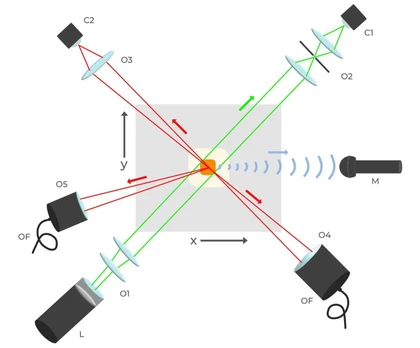
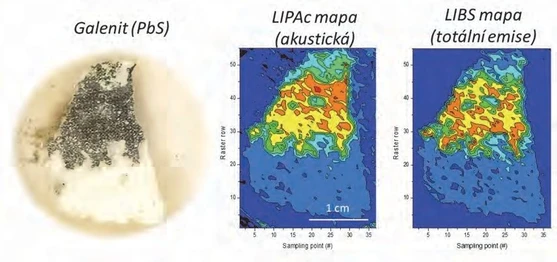
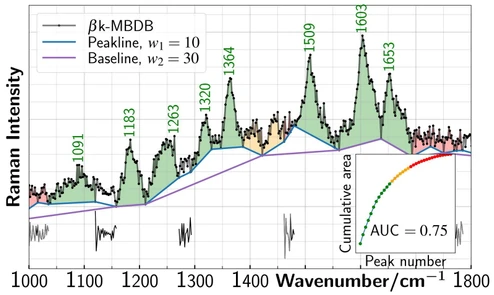
V kategorii B publikovaných prací obsadil první místo Dr. rer. nat. Marius Constantin Chirita Mihaila z Matematicko-fyzikální fakulty Univerzity Karlovy v Praze za práci „Light-based Aberration Correction in Electron Optics for Advanced Spectroscopic Applications“. Na druhém místě se umístila Mgr. Markéta Bosáková, Ph.D. z Ústavu chemie Masarykovy univerzity za práci „Acoustic spectroscopy of laser-induced plasma“ a třetí místo obsadil Mgr. et Mgr. Vít Pavelka, Ph.D. z Ústavu analytické chemie AV ČR za práci „Povrchem zesílená Ramanova spektroskopie snadno a spolehlivě“.
Soutěž opět potvrdila svou roli důležité platformy pro prezentaci kvalitních prací mladých autorů a pro odbornou diskusi napříč spektroskopickými obory. Poděkování patří všem soutěžícím za předložené práce, hodnotitelům za pečlivé posouzení příspěvků a oceněným autorům náleží blahopřání k dosaženým výsledkům.
Kategorie B - 1. místo
Light-based Aberration Correction in Electron Optics for Advanced Spectroscopic Applications
- Dr. rer. nat. Marius Constantin Chirita Mihaila (Department of Chemical Physics and Optics, Faculty of Mathematics and Physics, Charles University, Prague, Czech Republic)
- E-mail: [email protected]
List of Submitted Works:
- Chirita Mihaila, M.C., Koutenský, P., Moriová, K. and Kozák M. Light-based electron aberration corrector. Nat. Photon. (2025). https://doi.org/10.1038/s41566-025-01760-8.
- Chirita Mihaila, M.C., Laštovičková Streshkova, N., and Kozák, M. (2025). Light-Based Chromatic Aberration Correction of Ultrafast Electron Microscopes. Physical Review Letters, 134(20), 203802.
- Chirita Mihaila, M. C., and Kozák, M. (2025). Design for light-based spherical aberration correction of ultrafast electron microscopes. Optics Express, 33(1), 758-775.
Summary
Recent advances in ultrafast electron microscopy have opened a new regime for time-resolved electron spectroscopy, where the phase and energy of free-electron wavepackets can be controlled with femtosecond lasers. However, achieving true spectroscopic resolution in both space and time has been fundamentally constrained by electron-optical aberrations, particularly spherical and chromatic aberration, and by the intrinsic energy spread of the electron source, all of which distort the probe wavefront, degrade energy resolution, and limit quantitative spectroscopic analysis.
Marius Constantin Chirita Mihaila: Figure1: Graphical visualization of light-based (red) aberration correction of electrons (blue).
The submitted collection of works presents a comprehensive experimental and theoretical framework for light-based aberration correction in electron beams using structured optical fields. Together, these studies establish a new approach in which laser–electron interaction adaptively shapes the electron wavefront and energy distribution. In the first paper (Nature Photonics, 2025), we experimentally demonstrate the correction of third-order spherical aberration in a cylindrically symmetric electron lens through interaction of electrons with a tailored Laguerre–Gaussian optical field. This optical field acts as a light-based electron aberration corrector that compensates the intrinsic positive spherical aberration of electromagnetic lenses, reducing the aberration coefficient from approximately 2.5 m to near zero. The second paper (Physical Review Letters, 2025) extends the concept to chromatic aberration correction, showing that an optical field can also compensate for aberration caused by the energy dispersion in an electron pulse. This approach paves the way for light-assisted, lossless monochromatization of the electron beam, producing narrowband and phase-stable electron pulses ideally suited for high-resolution electron energy-loss spectroscopy and photon-induced near-field electron microscopy. The third paper (Optics Express, 2025) provides the theoretical design and modelling framework for integrating such light-based correctors into next-generation ultrafast electron spectroscopic instruments, demonstrating that optical-field correction can be implemented compactly and dynamically within standard electron columns near the electron cross-over.
Light-based corrected electron beams exhibit enhanced spatial and temporal (energy) coherence, maintaining a well-defined phase relationship across the beam spectrum and enabling high-fidelity spectroscopic measurements. The demonstrated correction of spherical and chromatic aberrations represents a crucial step toward full optical control of electron beams. In particular, the light–electron coupling shown in the second paper (Physical Review Letters, 2025) offers the conceptual basis for light-assisted monochromatization, in which the electron energy spread could be dynamically reduced without any loss. Although this process remains to be experimentally validated, the present results show that light-based aberration correction provide a viable route toward next-generation, quantitatively precise, high-resolution spectroscopy of materials, nanostructures, and ultrafast dynamic processes.